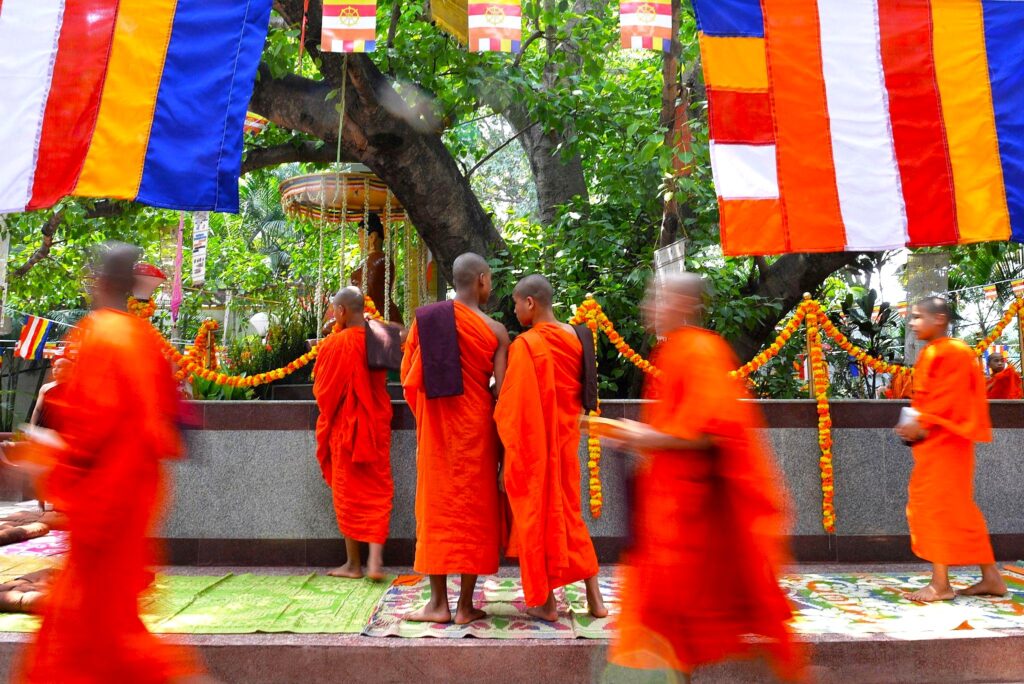
On the occasion of Buddha Purnima, one question continues to inspire millions across India: Why did Dr. B. R. Ambedkar choose Buddhism? For B. R. Ambedkar, Buddhism was not just a religion—it was a path of dignity, equality, and social revolution. His decision to embrace Buddhism on 14 October 1956 at Deekshabhoomi in Nagpur was one of the most powerful social transformations in modern Indian history. It was not a personal spiritual decision alone. It was a movement for justice.
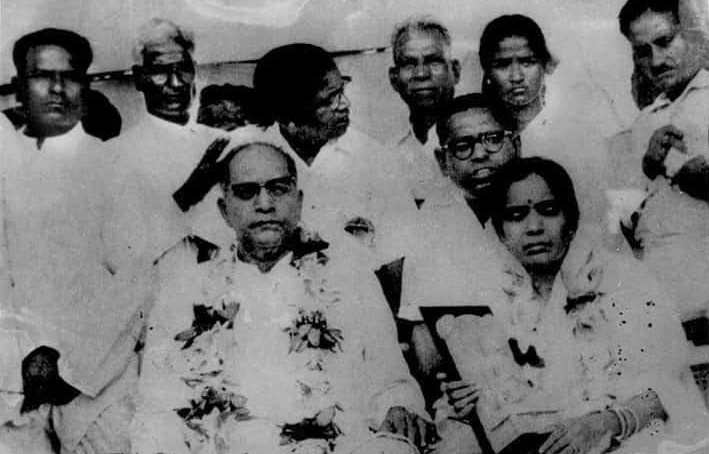
A Life Against Caste Discrimination
Dr. Ambedkar was born into a society deeply divided by caste hierarchy. Despite his extraordinary education and global achievements, he faced discrimination throughout his life simply because of his birth. From school classrooms to public spaces and institutions, untouchability was a harsh reality. He believed that political rights alone were not enough if social dignity was denied. This led him to search for a path that offered both freedom and equality.
“I Was Born a Hindu, But I Will Not Die a Hindu.”
One of his most famous declarations was the following:
“I was born a Hindu, but I will not die a Hindu.”
This was not anger—it was a moral and philosophical rejection of a system that denied human equality.
Dr. Ambedkar spent years studying many religions, including Islam, Christianity, Sikhism, and Buddhism, before making his final decision.
He wanted a path based on the following:
-Equality
-Rational thinking
-Human dignity
-Social justice
-Liberty and fraternity
He found these values most strongly in Buddhism.
“The path shown by Buddha became the path of freedom for Ambedkar—and for millions who still walk it today.”
Why Buddhism?
Gautama Buddha taught compassion, wisdom, and equality—not birth-based hierarchy. Buddhism rejected caste discrimination and emphasized morality over social status.
For Dr. Ambedkar, Buddhism offered:
- Equality Without Caste
Unlike caste-based social systems, Buddhism treated all human beings as equal. - Rational and Scientific Thinking
Ambedkar admired Buddhism because it encouraged reason, not blind faith. - Social Transformation
He saw Buddhism as a practical path for building a just society. - Liberty, Equality, Fraternity
These values were central both to Buddhism and to the Indian Constitution.

The Historic Conversion at Deekshabhoomi. He believed Buddhism was the religion most compatible with democracy. The Historic Conversion at Deekshabhoomi. On 14 October 1956, Dr. Ambedkar embraced Buddhism along with lakhs of followers at Deekshabhoomi, Nagpur. This event became known as one of the largest peaceful religious conversions in world history. He took the 22 vows, rejecting caste oppression and embracing Buddhist principles of equality and self-respect. This was not only a religious act—it was a declaration of human dignity.
Navayana Buddhism: Ambedkar’s New Vision
Dr. Ambedkar presented Buddhism in a socially transformative form often called Navayana Buddhism. His focus was not only spiritual liberation but also the following:
-Ending social injustice
-Building economic equality
-Restoring dignity
-Creating a society based on justice
His final work, The Buddha and His Dhamma, explained this vision clearly.

Why This Matters Today
Even today, caste discrimination, exclusion, and inequality continue in many forms. That is why Ambedkar’s decision remains deeply relevant. His message reminds us: Religion must serve humanity, not hierarchy. On Buddha Purnima, remembering Ambedkar’s embrace of Buddhism means remembering the struggle for equality itself.
Chose Buddhism because….
Dr. B. R. Ambedkar chose Buddhism because he chose dignity over discrimination, reason over blind tradition, and equality over oppression. His conversion was not an escape—it was a revolution. It gave millions a new identity built on self-respect and justice.
That is why Buddha Purnima is not only a celebration of Lord Buddha’s birth—it is also a reminder of Ambedkar’s unfinished mission for social democracy.
“The path shown by Buddha became the path of freedom for Ambedkar—and for millions who still walk it today.”